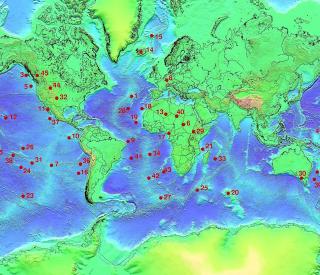
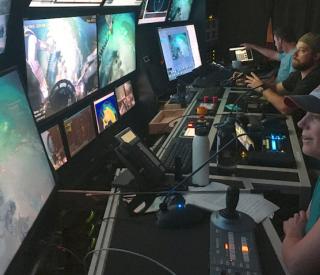
A team of scientists led by Georgia Tech have observed past episodic intraplate magmatism and corroborated the existence of a partial melt channel at the base of the Cocos Plate.
Energy materials facilitate the conversion or transmission of energy. They also play an essential role in how we store energy, reduce power consumption, and develop cleaner, efficient energy solutions.
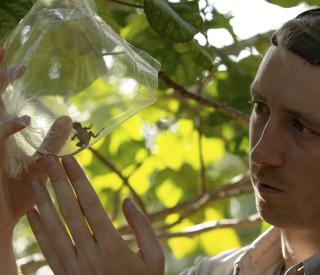
Stroud joins nine newly appointed Fellows and ten ESA Early Career Fellows, elected for "advancing the science of ecology and showing promise for continuing contributions" in the field.
School of Computational Science and Engineering (CSE) Assistant Professor Peng Chen is co-principal investigator of a $1.5 million National Science Foundation grant to develop the CRIS-HAZARD system.
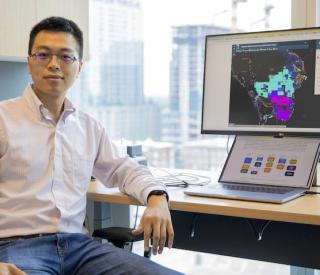
A new data visualization tool designed by a Georgia Tech Ph.D. student is helping a team of microbial ecologists, geobiologists, and oceanographers gain more insight into how deep-sea microorganisms interact within their environment.
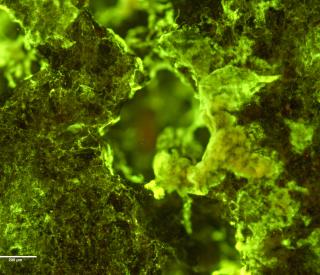
Up to 80% of infections in human bodies can be attributed to the bacteria growing in biofilms, and understanding how biofilms grow could lead to critical insights on controlling them.