Skip to main navigation Skip to main content
Georgia Institute of Technology

Sustainability at Georgia Tech

Main navigation

  • Home
  • Education
  • Research
  • Campus Sustainability
  • News

User account menu

  • Log in

The Who's Who of Bacteria: A Reliable Way to Define Species and Strains

Image
saltern Ponds_1.jpeg
Description

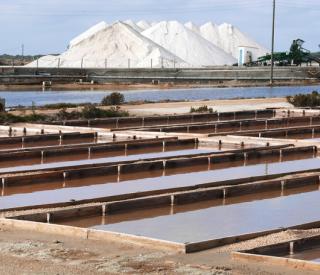
<p>A photo of the saltern site in Spain where a significant portion of the research was done. A saltern is used to produce salt for human consumption and is a natural environment for<em> Salinibacter ruber </em>bacterium<em>.</em></p>

Mercury ID
673283
Mar 04, 2024

The researchers used data to investigate natural divisions in bacteria with a goal of determining a viable method for organizing them into species and strains.

Video Illustrates Interactive Tech Created to Help Understand Dolphin Communication

Image
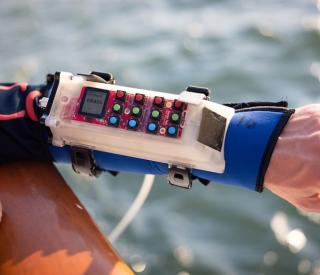
Developed at Georgia Tech for the Wild Dolphin Project, CHAT emits dolphin-like whistle sounds made up to represent objects divers handle in the water.
Mercury ID
673401
Mar 12, 2024

A new video from Georgia Tech's College of Computing highlights Professor Thad Starner's collaboration with the Wild Dolphin Project.

Growing Bacteria in Space with Astronauts

Image
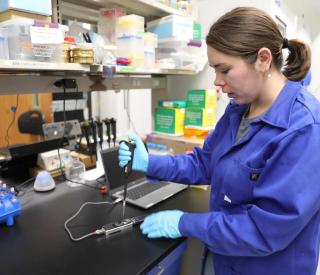
jordan.jpgGeorgia Tech Ph.D. student Jordan McKaig demonstrates how NASA astronauts onboard the International Space Station will use the MinION sequencing device to identify bacteria genomes. Credit: Georgia Tech
Description

<p>Georgia Tech Ph.D. student Jordan McKaig demonstrates how NASA astronauts onboard the International Space Station will use the MinION sequencing device to identify bacteria genomes. Credit: Georgia Tech</p>

Mercury ID
673485
Mar 19, 2024

Georgia Tech researchers are teaming up with NASA to study bacteria on the International Space Station to help define how scientists and healthcare professionals combat antibiotic-resistant bacteria for long-duration space missions.

Everlasting African Wildfires Fueled by Aerosol Feedback

Image
Wildfires
Description

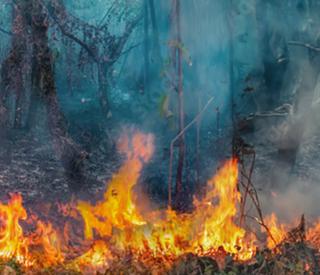
<p>Fires have been burning in Africa for centuries. The fires are fueled by feedback loop as aerosols interact with the climate. It’s a process that plays a critical role in the regulation of African ecosystems. Adobe iStock photo</p>

Mercury ID
672662
Jan 03, 2024

Wildfires in Africa are fueled by a feedback loop mechanism as aerosols interact with the climate

New Approach Could Make Reusing Captured Carbon Far Cheaper, Less Energy-Intensive

Image
Hatzell-DAC-electrochem-reactor-Hakhyeon-Song-Carlos-Fernandez-Po-Wei-Huang-0529-t.jpg
Description

<p>A new electrochemical reactor design developed with Marta Hatzell by postdoctoral scholar Hakhyeon Song (middle) and Ph.D. students Carlos Fernández and Po-Wei Huang (seated) converts carbon dioxide removed from the air into useful raw material. Their approach is cheaper and simpler while requiring less energy, making it a promising tool to improve the economics of direct air capture systems. (Photo: Candler Hobbs)</p>

Mercury ID
673849
Apr 25, 2024

A team led by Marta Hatzell designed a new electrochemical reactor to seamlessly integrate into direct air capture systems and turn CO2 into useful raw materials.

Energy Materials: Driving the Clean Energy Transition

Image
Georgia Tech Energy Materials Day 2024
Mercury ID
673164
Feb 21, 2024

Energy materials facilitate the conversion or transmission of energy. They also play an essential role in how we store energy, reduce power consumption, and develop cleaner, efficient energy solutions.

James Stroud Named Early Career Fellow by Ecological Society of America

Image
James Stroud examines an anole (Day’s Edge Productions)
Mercury ID
673890
Apr 30, 2024

Stroud joins nine newly appointed Fellows and ten ESA Early Career Fellows, elected for "advancing the science of ecology and showing promise for continuing contributions" in the field.

Machine Learning Key to Proposed App that Could Help Flood-prone Communities

Image
Peng Chen NSF co-pi.jpeg
Mercury ID
671984
Oct 09, 2023

A School of Computational Science and Engineering faculty member is co-leading a $1.5M National Science Foundation grant to mitigate flood risks.

Machine Learning Key to Proposed App that Could Help Flood-prone Communities

Sep 28, 2023
School of Computational Science and Engineering (CSE) Assistant Professor Peng Chen is co-principal investigator of a $1.5 million National Science Foundation grant to develop the CRIS-HAZARD system.

Machine Learning Could be Key to Early Leakage Detection in Underground Carbon Storage Sites

Image
SLIM Group CNF.jpeg
Mercury ID
672627
Dec 20, 2023

The feasibility study by Georgia Tech researchers explores using conditional normalizing flows (CNFs) to convert seismic data points into usable information and observable images. This potential ability could make monitoring underground storage sites more

Pagination

  • Previous page ‹‹
  • 5 Page 5
  • Next page ››
Subscribe to go-researchnews

Georgia Institute of Technology

North Avenue
Atlanta, GA 30332 +1 404.894.2000 Campus Map

  • General
  • Directory
  • Employment
  • Emergency Information
  • Legal
  • Equal Opportunity, Nondiscrimination, and Anti-Harassment Policy
  • Legal & Privacy Information
  • Human Trafficking Notice
  • Title IX/Sexual Misconduct
  • Hazing Public Disclosures
  • Accessibility
  • Accountability
  • Accreditation
  • Report Free Speech and Censorship Concern
Georgia Tech

© 2026 Georgia Institute of Technology

GT LOGIN