Skip to main navigation Skip to main content
Georgia Institute of Technology

Sustainability at Georgia Tech

Main navigation

  • Home
  • Education
  • Research
  • Campus Sustainability
  • News

User account menu

  • Log in

As Temperatures Climb, Flying Insects Slower to Migrate to Cooler Elevations

Image
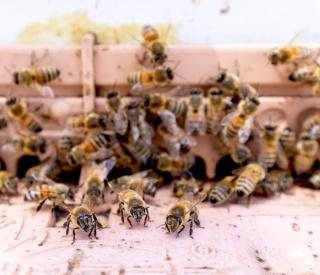
A close up of bees flying into a hive on the CU Denver campus.
Description

<p>A close up of bees flying into a hive on the CU Denver campus.</p>

Mercury ID
671675
Sep 11, 2023

In response to changing climates, many plants and animals are moving to higher elevations, seeking cooler temperatures. But a new study finds that flying insects like bees and moths may struggle with insurmountable issues to this escape route.

Thinning Ice Sheets May Drive Sharp Rise in Subglacial Waters

Image
March 2, 2015: Image taken by the Operational Land Imager onboard Landsat 8. (NASA Earth Observatory)
Mercury ID
671437
Aug 21, 2023

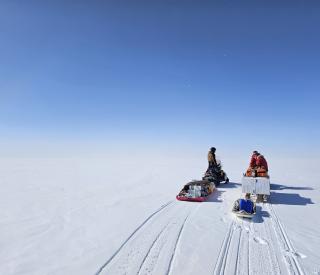
Up to twice the amount of subglacial water that was originally predicted might be draining into the ocean – potentially increasing glacial melt, sea level rise, and biological disturbances.

Scientists Unearth 20 Million Years of ‘Hot Spot’ Magmatism Under Cocos Plate

Image
Mantle plumes, shown in red, have been identified around the world. (Ingo Wölbern, via Wikimedia Commons)
Description

<p>Mantle plumes, shown in red, have been identified around the world. (Ingo Wölbern, via Wikimedia Commons)</p>

Mercury ID
670990
Jun 20, 2023

A team of scientists led by Georgia Tech have observed past episodic intraplate magmatism and corroborated the existence of a partial melt channel at the base of the Cocos Plate.

Video Illustrates Interactive Tech Created to Help Understand Dolphin Communication

Image
Developed at Georgia Tech for the Wild Dolphin Project, CHAT emits dolphin-like whistle sounds made up to represent objects divers handle in the water.
Mercury ID
673401
Mar 12, 2024

A new video from Georgia Tech's College of Computing highlights Professor Thad Starner's collaboration with the Wild Dolphin Project.

Everlasting African Wildfires Fueled by Aerosol Feedback

Image
Wildfires
Description

<p>Fires have been burning in Africa for centuries. The fires are fueled by feedback loop as aerosols interact with the climate. It’s a process that plays a critical role in the regulation of African ecosystems. Adobe iStock photo</p>

Mercury ID
672662
Jan 03, 2024

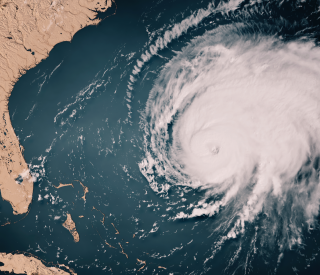
Wildfires in Africa are fueled by a feedback loop mechanism as aerosols interact with the climate

Energy Materials: Driving the Clean Energy Transition

Image
Georgia Tech Energy Materials Day 2024
Mercury ID
673164
Feb 21, 2024

Energy materials facilitate the conversion or transmission of energy. They also play an essential role in how we store energy, reduce power consumption, and develop cleaner, efficient energy solutions.

James Stroud Named Early Career Fellow by Ecological Society of America

Image
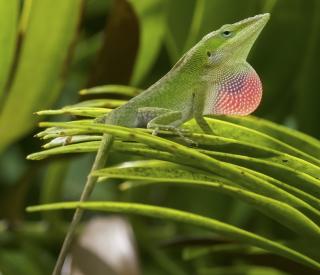
James Stroud examines an anole (Day’s Edge Productions)
Mercury ID
673890
Apr 30, 2024

Stroud joins nine newly appointed Fellows and ten ESA Early Career Fellows, elected for "advancing the science of ecology and showing promise for continuing contributions" in the field.

Machine Learning Key to Proposed App that Could Help Flood-prone Communities

Image
Peng Chen NSF co-pi.jpeg
Mercury ID
671984
Oct 09, 2023

A School of Computational Science and Engineering faculty member is co-leading a $1.5M National Science Foundation grant to mitigate flood risks.

Machine Learning Key to Proposed App that Could Help Flood-prone Communities

Sep 28, 2023
School of Computational Science and Engineering (CSE) Assistant Professor Peng Chen is co-principal investigator of a $1.5 million National Science Foundation grant to develop the CRIS-HAZARD system.

Visualization Tool Helps Oceanographers Predict Sediment Sample Hotspots

Image
victoria copy 2.jpg
Mercury ID
674331
Jul 11, 2024

A new data visualization tool designed by a Georgia Tech Ph.D. student is helping a team of microbial ecologists, geobiologists, and oceanographers gain more insight into how deep-sea microorganisms interact within their environment.

Pagination

  • Previous page ‹‹
  • 7 Page 7
  • Next page ››
Subscribe to Research

Georgia Institute of Technology

North Avenue
Atlanta, GA 30332 +1 404.894.2000 Campus Map

  • General
  • Directory
  • Employment
  • Emergency Information
  • Legal
  • Equal Opportunity, Nondiscrimination, and Anti-Harassment Policy
  • Legal & Privacy Information
  • Human Trafficking Notice
  • Title IX/Sexual Misconduct
  • Hazing Public Disclosures
  • Accessibility
  • Accountability
  • Accreditation
  • Report Free Speech and Censorship Concern
Georgia Tech

© 2026 Georgia Institute of Technology

GT LOGIN