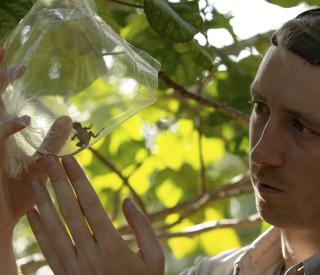
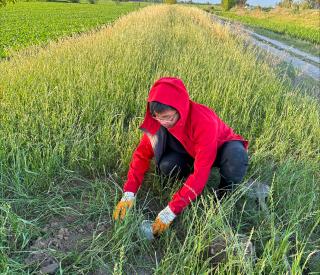
Stroud joins nine newly appointed Fellows and ten ESA Early Career Fellows, elected for "advancing the science of ecology and showing promise for continuing contributions" in the field.
Professor Joel E. Kostka has been named a Union Fellow by the American Geophysical Union, joining a slate of 53 international researchers selected as 2024 AGU Fellows for “significant contributions to the Earth and space sciences.”
Zhigang Peng and graduate students Phuc Mach and Chang Ding are using small seismic sensors to better understand just how, why, and when certain earthquakes are occurring.
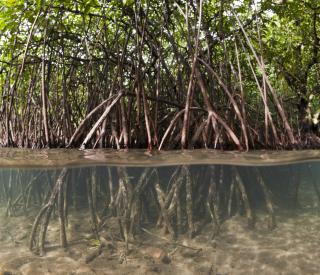
Researchers at the Georgia Institute of Technology and Yale University are proposing a novel pathway through which coastal ecosystem restoration can permanently capture carbon dioxide from the atmosphere.
Led by School of Earth and Atmospheric Sciences Professor Greg Huey, the NSF RAPID grant is for analyzing air chemistry data collected during a three-week span when a chemical plume impacted the Atlanta area.